Neoliberalglobalization since the late 1970s has restricted the policy autonomy of national states through a variety of pressures that “discipline” governments implementing measures deemed hostile to free markets. Yet the world is changing fast and the rise of China in particular is shifting the global power balance. Strangely, however, remarkably little has changed in the global order beyond some reshuffling of the dominant players and somewhat greater national independence in decision making. This argument is made at length in Civilizing Globalization, which I recently co-edited with Ali Burak Guven. Continue reading
Six Reasons for Reading Karl Polanyi (Even If You Study the Global South): Part II
In addition to reading Karl Polanyi for his appealing normative stance and transdisciplinary approach, I am drawn to four other attractive features. Continue reading
Six Reasons for Reading Karl Polanyi (Even If You Study the Global South): Part I
Why do social scientists select one theoretical framework rather than another? Continue reading
Catastrophic Climate Change: How Should We Respond?
How many years do we have to prevent catastrophic climate change? Much of the debate, especially that involving governments, is conducted on the premise that we have ample time to make the necessary changes. For instance, the Chinese government’s recent commitment that China’s emissions of GHGs will peak in 2030 was met with broad approval. But the scientific research suggests that we actually have much less time to drastically reduce our GHS emissions than is generally thought. Continue reading
Can Moderate Social Democracy be Progressive? A View from the Global South
1 Reply
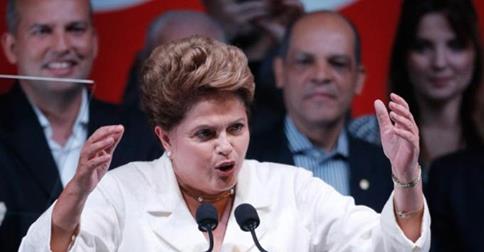 Progressive movements divide into two types. On the one hand, there are leftist parties with a moderate strategy that aim, or at least resign themselves, to implement redistributive programs with the acquiescence of the elites. On the other hand, we find parties that believe that only unrelenting confrontation of existing power structures and inherited privilege will bring the desired results. The division between class compromise and class struggle is fundamental. Continue reading
Climate Change and the Left in the Global South
Can the #Left in the Global South mitigate climate change any better than the neoliberals? A lot rides on the answer because the trends in this neoliberal era are particularly dire in the tropics. In many countries, populations have doubled in less than 30 years. Meanwhile, rising incomes have vastly expanded the level of consumption of national populations. When global warming is added to this equation, various unfortunate consequences follow. Continue reading
The Politics of Taking Sustainability Seriously
NOTES FOR A LECTURE
I. INTRODUCTION
(a) The Sustainable Development Goals (SDGs), as developed by the UN Open Working Group on Sustainable Development in 2014, represent nothing less than a depiction of the Good Society. Continue reading

Left Populism: An Alternative to Neoliberalism?
Left populism has recently emerged as a political response to growing inequality, persistent poverty and the dominance of neoliberal doctrine. It dates from the early 2000s, with varying strains in Eastern and Central Europe, the “Bolivarian Revolution” of Hugo Chávez and Nicolas Madura in Venezuela since 1999 and somewhat similar regimes in contemporary Ecuador and Bolivia. In Reinventing the Left in the Global South, I deal with the last three cases in detail.
is left populism just old-style populism in new clothes, or is it a new and genuine alternative to neoliberalism? Continue reading
The Viability of a Radical Social-Democratic Path
Socialism in the twentieth century generally collapsed or devolved into an authoritarian bureaucratic collectivism. Have any recent movements in the Global South found a way of avoiding these dead-ends? One possibility is the radical social-democratic strategy of socialist transition; but comparative analysis suggests it is a risky, turbulent venture whose success depends upon unusual conditions. Continue reading
What is social democracy?
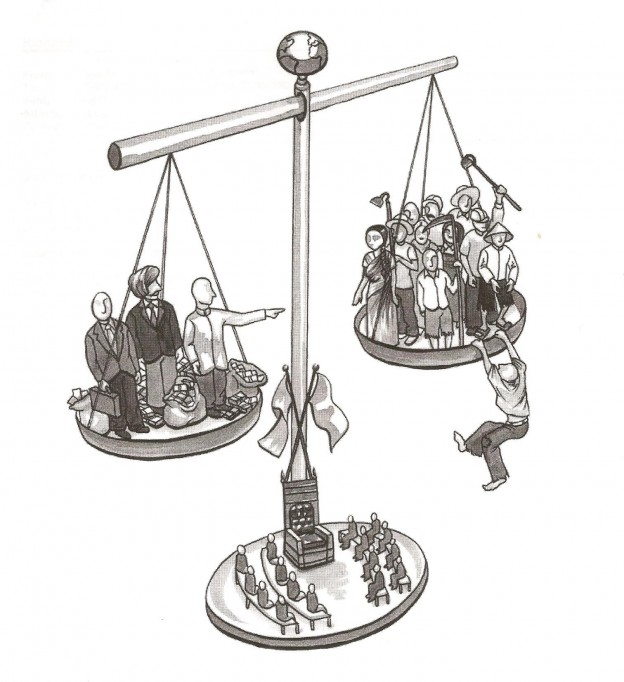
Social democracy is one of the vaguest terms in the political vocabulary, yet it refers to a regime of considerable importance. Originally, social democrats were socialists who thought the surest path to societal transformation in emergent liberal democracies lay in building popular support through competitive party politics and social-movement organization. Since the 1960s and 1970s, however, social democrats have dropped references to socialist goals in favour of promoting a progressive, domesticated form of capitalism. But what precisely does this latter goal entail? Today, “socialist” parties in competitive party systems often have platforms that suggest a social-democratic orientation, whereas parties labelled “social-democratic” or “labour” pursue policies little different from those of the neoliberals. How can we resolve this definitional riddle? Continue reading